
Boilers Explained: A Full Guide to Boiler Types, Prices, Brands
Boilers are vessels that heat water for a home’s taps, showers, and central heating system. Boilers generate heat by burning a fuel, or passing electricity through a heating element, and transferring the resulting heat to water.

The majority of boilers rely on the following fourteen core components to operate.
- Burner
- Combustion chamber
- Heat exchanger
- Expansion vessel
- Controls
- Circulator pump
- Pressure Relief Valve (PRV)
- Ignition system
- Printed Circuit Board (PCB)
- Overheat thermostat
- Diverter valve
- Auto-air vent
- Filling loop
- Supply and return lines
However, the above components may differ slightly between different types of boilers.
Combi, system, and conventional boilers are the three primary boiler types. Combi boilers heat water directly and do not use storage tanks, making them perfect for smaller properties. Conventional and system boilers use an external storage tank to keep hot water ready for use. Conventional boilers additionally use external cold water tanks to supply water and maintain pressure in the heating and domestic hot water systems.
Regardless of their type, boilers must burn fuel to produce heat. The most common boiler fuel is gas, followed by LPG, oil, and electricity. Gas boilers draw on your domestic gas supply as a source of fuel, while LPG and oil boilers require a storage tank for the fuel. Electric boilers run on mains electricity. Boilers that operate on electricity are currently quite rare due to the high cost of electricity in the UK.
Boilers of all types and fuels are susceptible to problems such as leaks, pressure issues, and blockages. You can prevent such problems from occurring early in the boiler’s lifecycle by choosing a model with a long warranty, and servicing the appliance on an annual basis. A well maintained boiler may last as long as 15-20 years. However, even the best boilers eventually suffer from wear-and-tear related damage. If your boiler breaks down often, is no longer under warranty, and you don’t have boiler cover, getting a replacement may be your most prudent path forward.
To choose the right replacement boiler for your property, consider how much heat and hot water your household needs, how much space you have, and how much you’re willing to spend.
Boilers typically cost £500 – £3,000 excluding fitting costs. The price of a new boiler depends on its output, type, additional features, and the manufacturer. Spending a bit more on a premium brand is usually worth it, since you get a high-quality, reliable product with a long warranty.
The five best boiler brands in the UK are Viessmann, Worcester Bosch, Alpha, Ideal, and Vaillant. Vaillant and Worcester are premium boiler manufacturers that make high-performance boilers loaded with additional features. Viessmann, Alpha, and Ideal are more affordable brands that offer a good balance between quality and price.
Installation typically adds £1,000-£2,000 to the cost of replacement. Switching from one type of boiler to another and changing the boiler’s location increases installation costs significantly. Your choice of installer likewise impacts your grand total, since national heating corporations tend to charge more than local and online fitters.
Below is our thorough guide to all the crucial information you need to know about boilers, including how they work, how to fix them, what they cost, and how to find a replacement boiler.
What is the primary function of a boiler?
The primary function of a boiler is to heat water for a home’s radiators and taps. A boiler must perform these two tasks separately, since the radiator water (or “heating water”) is dirty and not potable. How a boiler raises the temperature of heating and tap water depends on the boiler type, but the basic operational principle behind heat generation and transfer to water is largely the same for all boilers.
How does a boiler work?
A boiler works by generating heat, either through burning a fossil fuel or passing electricity through a heating element. This heat then warms the water running through your central heating system, and raises the temperature of the Domestic Hot Water (DHW).
Your boiler warms the central heating water by passing it through a heat exchanger. There, the heat from the burning fuel transfers to the water through a conductive medium, such as stainless steel or aluminium. The central heating pump (which may be external or integral to the boiler) then circulates this hot water through the pipes and radiators inside your home. In turn, the heat from this water makes the exterior of your radiators hot, and thus raises your home’s indoor air temperature.
Domestic boilers also heat water in your taps, but this function varies between boiler types. Conventional boilers and system boilers raise the temperature of the central heating water with their heat exchangers, then heat DHW indirectly by passing a coil with central heating water through the DHW cylinder. Meanwhile, combination boilers (known as “combi boilers”) have two separate heat exchangers, one for DHW and another for radiator water.
What are the main boiler parts?
A typical domestic boiler relies on 14 main parts that allow it to produce heat, transfer it to water, relieve extra pressure, circulate the water, and allow you to operate the user controls.
| Boiler part | Function |
|---|---|
| Burner | This part converts fuel to heat by burning it. The generated heat then transfers to the water via a heat exchanger. |
| Combustion chamber | The combustion chamber is an insulated container that holds the boiler’s burner. The temperatures produced by the burner are quite high, and the combustion chamber protects the rest of the boiler’s parts from the extreme heat. |
| Heat exchanger | The heat exchanger is a metal part that separates the burner from the water supply and transfers heat from the former to the latter. System and conventional boilers have a single heat exchanger, whilst combi boilers typically have two: one for central heating, and one for DHW. |
| Expansion vessel | The expansion vessel absorbs excess pressure in the boiler as the water heats and expands. This prevents pressure-related damage to the boiler’s components. |
| Controls | Controls let you adjust your boiler’s settings. Some boiler controls are external (like thermostats) while others are integral to the boiler (like the timer). |
| Circulator pump | The pump circulates water throughout your home’s pipes and radiators. If you have a regular or system boiler, the pump may be external, whilst combis generally have this part inside their casing. |
| Pressure Relief Valve (PRV) | A PRV lets out water if your boiler builds up too much pressure (usually above 3 bar). Together with the expansion vessel, the PRV helps keep the system pressure at normal operating level of 1-2 bar, which helps avert damage to other boiler parts. |
| Ignition system | This mechanism ignites fuel inside your boiler’s burner. Older boilers usually have a pilot light, which keeps a small gas flame burning at all times. Meanwhile, modern ignition systems ignite gas with a spark only when you turn the boiler on. |
| Printed Circuit Board (PCB) | The PCB is a boiler’s command centre. It allows internal boiler components to communicate with each other, and initiates various boiler processes in response to your commands. For example, increasing the temperature setting on your thermostat when the boiler is offline would tell the PCB to initiate ignition and allow fuel flow into the burner. |
| Overheat thermostat | An overheat thermostat monitors the central heating water temperature and prevents overheating. Overheating generally leads to overpressurisation, which damages boiler components over time. |
| Diverter valve | Combi boilers are equipped with a diverter valve, which lets the boiler switch between heating and DHW modes. |
| Auto-air vent | This part lets air trapped in the heating system escape. Without this vent, airlocks obstruct water flow and impede your boiler’s ability to heat the radiators. |
| Filling loop | This part lets you top up your heating system from the mains if the boiler has lost pressure. |
| Flow and return lines | The flow lines carry heated water to your radiators, whilst the return lines bring this water back to the boiler after it has dissipated the heat. |
What are the different types of boilers?
There are three primary types of boilers: regular (also known as “heat-only” or “conventional”), system, and combi. Each of these three types fulfils the same basic purpose of a boiler: heating radiators and DHW. However, each type performs this function differently and relies on unique components to deliver heat and hot water. The suitability of each boiler type differs depending on the property size, the family’s hot water consumption, and their existing heating setup, as we explain below.
- Combi boilers: Combi boilers heat both central heating and domestic hot water on demand. If you have a combi, you don’t need storage tanks to keep DHW hot and ready for use. Consequently, combis have a small footprint that makes them a good fit for small homes and apartments. However, you may find that a combi struggles to keep up with high demand for hot water; for example, running a tap and a shower at the same time may leave both users with a trickle, since the combi’s water flow rate is limited to the mains pressure. To this end, some combis (known as “storage combis”) come with an internal store of hot water that lets them meet higher hot water demand.
- System boilers: System boilers heat central heating water directly and heat domestic hot water by passing that central heating water through a coil in an external storage cylinder. If you have a system boiler, you need a separate hot water cylinder for storing DHW. This cylinder takes up additional space, so system boilers are better suited for larger homes with more floor area to spare. Likewise, you should opt for a system boiler if your household frequently uses lots of hot water, since combis struggles to keep up with high DHW demand.
- Conventional boilers: Conventional boilers work like system boilers with an external storage tank for domestic hot water. The difference between system boilers and conventional boilers is that conventional boilers use additional external tanks to store DHW and central heating water, in what’s known as an “open-vent” system. The term “open-vent” means that the heating system is not sealed, and the excess water pressure gets released back into the water storage tank instead of an expansion vessel inside the boiler. Conventional boilers are best-suited for large properties and households that use lots of hot water.
What fuel do boilers use?
Boilers use five broadly categorised fuel types: natural gas, Liquefied Petroleum Gas (LPG), oil, electricity, and biomass.
Gas boilers
Gas boilers are by far the most common, since most UK households are connected to the gas grid, this fuel type is cheaper than the alternatives, and gas boilers generally cost less than their non-gas counterparts.
Gas boilers connect directly to your gas mains, and begin burning the gas to heat water when you either need hot water in your taps or when you increase the temperature setting on the thermostat. However, older gas boilers that have a pilot light also use natural gas even when the heating is off to keep the pilot light flame burning. This tiny flame ignites the gas in the burner when you call for heat or DHW.
Are gas boilers being phased out?
Yes, gas boilers are being slowly phased out. Recent UK legislation prohibits the installation of gas boilers in new properties starting in 2025. However, you do not need to get rid of your gas boiler if you already have one installed, and may replace your gas boiler if you do not live in a property constructed after 2025.
LPG boilers
Many gas boiler models also run on LPG or come with LPG conversion kits. LPG is a suitable gas alternative if your home is off the gas grid and you’re not willing to pay a premium to heat with electricity or use the dirtier oil as your boiler fuel. That said, LPG costs more than natural gas and is a bit less convenient to use, since you must store it safely in your home and remember to replenish the supply before it runs out.
Oil boilers
Oil boilers are increasingly uncommon, since oil (usually kerosene) produces more emissions than gas or LPG when it burns. Like LPG, oil requires on-site storage, and you need to replenish it in time before you run out to avoid disruptions to heating. That said, oil is a viable natural gas alternative for properties off the gas grid, and it costs a bit less than LPG.
Electric boilers
Electricity is yet another viable power source for off-grid boilers, and it’s a cleaner alternative to LPG and oil. Electric boilers are also cheap and easy to install, which makes them appealing if you wish to save on up-front costs. However, electricity is notoriously expensive in the UK, with unit costs roughly three times more than those of natural gas.
Can boilers work on solar power?
Yes, some boilers can work with solar power. Conventional and system boilers can work with two-coil hot water cylinders, the secondary coil of which can be connected to a solar power supply.
What kind of fuel does your boiler use?
Fixed price online with next day installation
What are the common boiler problems?
The most common boiler problems revolve around leaks and pressure. A boiler’s internal parts (and the entire heating system, really) endure extreme stress due to the heat, pressure, and moisture they’re subjected to during operation. Even with safety devices that prevent overheating and overpressurisation, these stresses take their toll on the boiler’s parts over time. That’s when you start to see system leaks and pressure drops, and the consequent reduction in your boiler’s efficiency.
Whilst leaks and pressure issues are the most common, there’s another culprit that damages boilers over time: debris accumulation. This debris can either be sludge (tiny bits of metal coming off the pipework and sticking together), limescale from minerals in the water, or both. As it builds up inside the boiler’s hydraulic block, this debris restricts water flow, which causes overheating, overpressurisation, and undue stress on the components. Unchecked debris buildup may eventually cause expensive boiler parts (such as the heat exchanger) to crack and necessitate extremely expensive repairs.
Apart from leaks, pressure issues, and debris buildup, all boilers occasionally suffer from wear and tear. When a component succumbs to wear-related damage, you may be able to troubleshoot the issue by interpreting the fault codes that pop up on the boiler’s screen (these differ between brands and models). However, in most cases, you need a Gas Safe engineer to come in, diagnose the fault, and recommend corrective action.
Most boilers will develop at least some of the aforementioned issues during their lifetime. However, you can avoid many boiler problems by choosing a boiler with a long warranty, using a reputable installer to fit the boiler, and servicing your boiler annually.
Should I service my boiler annually?
Yes, you should service your boiler at least once a year. Boiler service is an annual inspection conducted by a GasSafe engineer to identify and fix problems early and improve the performance of your boiler. An annual service is often a requirement of a manufacturer’s warranty. Boiler service and a gas safety inspection are mandatory if you’re a landlord with boilers in your rental properties. The cost of annual boiler service ranges between £80 and £100, and is often included in a boiler cover policy.
What is boiler cover?
Boiler cover is a type of coverage package that pays for and facilitates repairs when your boiler breaks down. Boiler cover providers often bundle their plans with other kinds of coverage, like plumbing, home electrics, home security, and pest control.
When should boilers be replaced?
Boilers should be replaced every 15 years on average. A typical boiler lasts 15-25 years before it stops functioning properly. However, boilers often lose performance and efficiency much earlier in their lifespan, and this drives up your repair and energy costs. Replacing an inefficient old boiler even if it’s still operational gives you a chance to save hundreds of pounds per year in heating costs, according to the Energy Savings Trust.
However, there are circumstances when you may need to replace your boiler before hitting the 15-year benchmark. If your boiler is starting to break down frequently, is no longer under warranty, and you don’t have boiler cover, getting a new boiler makes the most financial sense in the long term. A boiler that’s developing faults often is likely on its way out, and without a warranty or boiler cover, the repair bills may begin to balloon to hundreds of pounds. If you’re in this situation, it’s best to consider a replacement boiler. Fitting a new boiler will stop you from dumping money into an appliance that’s slowly deteriorating, and help reduce your energy bills because newer boilers tend to be more energy efficient.
How to choose a replacement boiler?
To choose a replacement boiler, take the following five steps:
- Determine the boiler size.
- Decide which boiler type is most suitable.
- Establish your budget.
- Choose the boiler brand and model.
- Choose the boiler installation company.
Below, we explain each of these six steps in greater detail.
1. Determine the boiler size.
Determining the right size for your replacement boiler involves making two considerations: finding out the right heating capacity and the suitable hot water output.
Heating capacity measures the heat your boiler provides for the home’s radiators. This output is measured in kilowatts (kW) in the UK. You need a higher central heating output if you live in a larger property with more radiators, and vice versa.
| Number of Radiators | Heating Output Required (kW) |
|---|---|
| <10 | 24-27kW |
| 10-15 | 28-34kW |
| 15-20 | 35-42kW |
Once you’ve decided what size boiler you need to get sufficient heat to your radiators, it’s time to estimate your DHW needs and determine if this boiler size is appropriate.
| Number of Bathrooms | Heating Output Required (kW) |
| 1 | 24-27kW |
| 2 | 28-34kW |
| 2-3 | 35-42kW |
2. Decide which boiler type is most suitable
Deciding which boiler type is most suitable involves balancing three key considerations: floor space, hot water needs, and existing boiler type.
Combi boilers are the most popular boiler type in the UK because they’re small and efficient. Combis don’t require hot water cylinders to operate, since they heat DHW directly from the mains. This means you don’t need to find additional space for the DHW cylinder, and the boiler doesn’t need to keep a store of DHW heated at all times.
That said, combi boilers have a hard time keeping up with excessive DHW use. For example, if you frequently run multiple taps (or a shower and tap) at the same time, you may find that a combi does not produce sufficiently high volumes of hot water. Meanwhile, system and heat-only boilers are capable of meeting high DHW needs, but take up more space due to their reliance on water storage tanks to operate.
Replacing your existing boiler with the same type is the quickest and least expensive option. On the other hand, changing from one boiler type to another could add as much as £1,000 to your boiler installation cost, since you have to install or remove water storage tanks and the associated pipework. However, the added costs of conversion could be worth it if you wish to free up some space at home by replacing a heat-only boiler setup with a combi or system boiler.
3. Establish your budget
Determine how much you’re willing to spend on the boiler replacement. Generally speaking, a one-for-one swap (without changing the boiler type) costs between £1,500-£5,000, including both the boiler and installation.
The boilers alone cost £500 – £3,000. The boiler’s manufacturer, heating output, and the selection of features are the major drivers of this cost. Premium manufacturers, such as Worcester Bosch, price their boilers in the £1,200-3,000 range, whilst budget boilers (like Vokera) sell for as little as £700-800.
Meanwhile, boiler installation typically adds between £1,000 and £2,000 on top of the boiler cost, with the range depending on four factors. Firstly, converting boiler types adds about £1,000 on top of installation costs. Secondly, fitting a boiler in a new location generally inflates the costs by £500-1,000, since the engineers need to reroute the pipework. Thirdly, your geographic location influences the installation costs, since boiler fitters in the capital region and other pricey parts of the nation tend to charge the most for their services. Finally, choosing local installers or online companies is usually a cheaper alternative to large, national heating companies (regardless of geographic location).
No Fuss.
Get your fixed online price for a Which? approved boiler, installation included.
If you’re unable to pay the full cost of boiler replacement upfront, boiler financing is an option worth exploring. Boiler financing is a scheme that allows you to pay for your boiler in monthly instalments rather than in a single up-front payment. Most boiler distributors offer financing to their customers, with varying options for APR, downpayment, and term length. The distributors are not lenders themselves, and the financing comes from a financial institution. Credit checks are required when you apply for boiler financing, and customers generally need a good credit history to qualify.
4. Choose the installation company
You generally buy the boiler from the same company that then instals it in your home (DIY installations are not allowed by law unless you’re a Gas Safe-registered engineer). The installation process involves the six essential steps below.
- Remove the old boiler. Installers first remove your old boiler and dispose of it properly.
- Clean the system. The second step is to thoroughly clean out your existing system and heating pipework.
- Repair pipework. Installers make any necessary repairs or changes to the pipework to accommodate your new boiler.
- Fit the boiler. The fourth step in the boiler installation process is to fit the new boiler in its appropriate location.
- Commission the system. The next step after installing the boiler is for installers to commission the new system, which entails verifying that all system components are working properly.
- Register the boiler. The final step is to register your new boiler with your boiler manufacturer to activate your warranty. Some manufacturers require that you register the new boiler within 24 hours of installation.
In the UK, there are national, local, and online companies that sell and fit boilers. National companies tend to charge the most for boiler installations, largely due to brand recognition and reputation.
Local mum-and-pop shops may charge more or less than nationwide heating companies. The only way to find out is to actively solicit quotes from them.
Meanwhile, online boiler installers offer cheaper installations because they operate entirely online, without brick-and-mortar locations. The lower overhead gives online installers a competitive edge, as they’re able to pass their savings on to the consumer. For example, Heatable are online boiler installers that offer significant savings for their customers because they have such a tiny overhead. You can see what boiler models Heatable recommend (along with fixed-price quotes) by filling out their anonymous questionnaire right here on your computer screen.
5. Choose the brand and model
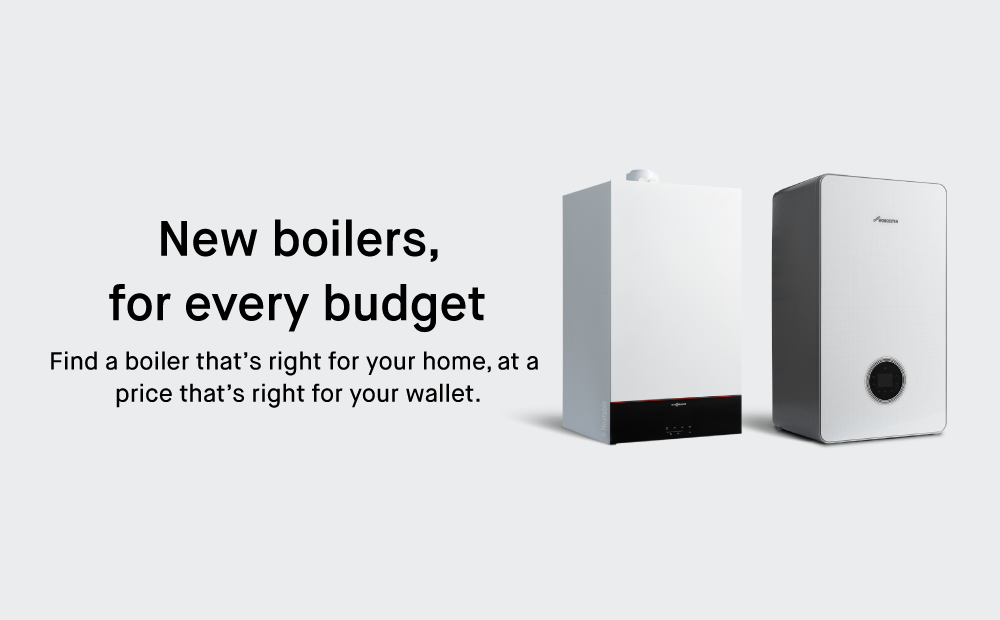
Boilers from premium brands are usually made with quality materials, boast high efficiency levels, and come with generous warranties. These top-shelf boilers generally cost more than their budget peers, but every premium manufacturer has at least a bare-bones option that balances affordability with quality. There are plenty of reputable boiler manufacturers on the UK market, but you can’t go wrong with either of the five best boiler brands below.
- Worcester Bosch: Worcester Bosch are a premium boiler brand known for advanced features, such as intelligent filling, weather compensation, and WiFi-enabled controls.
- Viessmann: Viessmann are a German boiler manufacturer known for well-engineered components like burners and heat exchangers that use smart sensors to increase the boilers’ fuel efficiency.
- Alpha: Alpha are a lower-cost boiler manufacturer that is nevertheless known for the quality of its products.
- Ideal: Ideal offer boilers that have all the features a typical family are likely to need. Ideal is a British boiler manufacturer with good warranty periods of up to 12 years.
- Vaillant: Vaillant are mid-market boiler manufacturer that maintains a good balance between quality and price.